
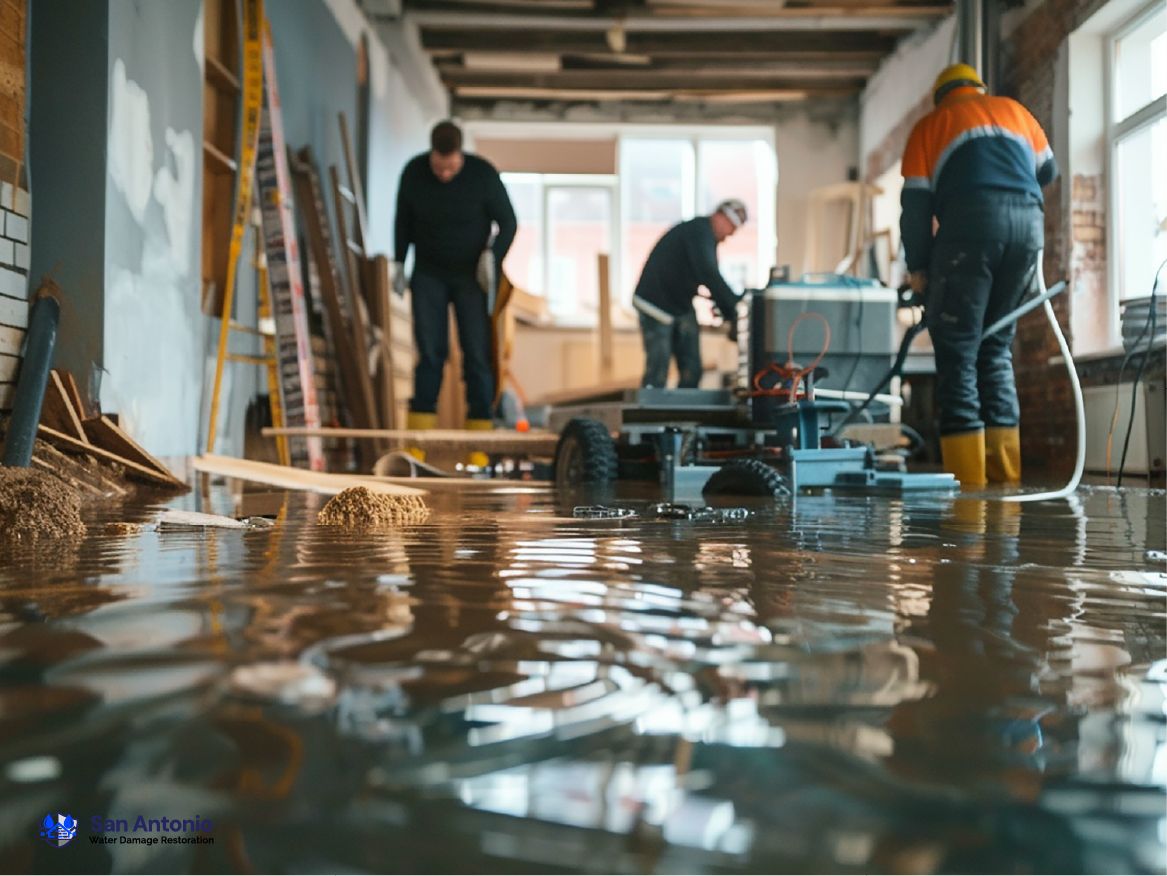
Mold Removal and Mold Remediation in San Antonio
Mold removal and mold remediation describe the same job, and the honest version of the answer is that nobody can remove all the mold from a building. Spores are in the air everywhere, indoors and out, and they always will be. What a remediation actually does is bring spore levels in the affected space back to what is normal for the surrounding environment, take out the material the growth has colonized, and correct the moisture that let it grow in the first place. Anyone promising total elimination is selling something that doesn't exist. Assessments start with a call to (726) 237-3201.
Mold removal vs. mold remediation: the difference
Why total removal isn't a real service
Mold is part of the outdoor environment, and every time a door opens some of it comes inside. A sterile, sealed building isn't achievable and wouldn't stay that way. So the measurable goal isn't zero — it's returning the indoor air and surfaces to normal background levels and keeping them there, which is exactly what post-remediation verification checks.
Removal is one step inside remediation
Removal is the physical part: cutting out colonized drywall, insulation and carpet pad and hauling it off. Remediation is the whole process around it — containment, negative air, HEPA cleaning, drying, and repairing the leak or humidity problem that fed the growth. Pull the material without correcting the moisture and it returns in the same wall, which is why both search terms lead to the same work.
Remediation is an air quality job first
Why scrubbing isn't the hard part
Most people picture mold removal as scrubbing a wall. The scrubbing is the easy part. The difficult part — and the reason this is a specialty trade — is that disturbing mold releases spores into the air by the millions, and untreated air moves freely through a house.
Controlling air before touching anything
That's why remediation is built around controlling air before anything gets touched. Seal the work area, put it under negative pressure so air flows in but never out, filter what's inside, and only then start removing material. Skip that sequence and you've taken a problem confined to one closet and distributed it through the return ducts into every bedroom.
Why this climate keeps mold in business
Humidity and the growth sites nobody checks
Gulf moisture pushes ambient humidity high enough that indoor relative humidity climbs without anyone noticing, and mold needs surprisingly little standing water to establish — a consistently damp surface is enough. That's a meaningful difference from drier parts of Texas. On slab-on-grade construction the classic growth sites are the ones nobody looks at: the back side of baseboard, the bottom several inches of drywall where it wicked water up from the slab, the underside of a vanity, and the framing behind a shower surround.
Attics, crawl spaces, HVAC and older homes
Add attics where a roof leak has kept sheathing damp, crawl spaces on the older housing stock, and HVAC systems where a condensate pan has been overflowing into a closet, and you have the places we find growth most often. Older homes carry more risk simply because they've had more chances. A galvanized supply line that seeped behind a wall for a long stretch leaves the ideal conditions long after the plumbing gets replaced.
Our mold remediation process
1. Inspection and moisture source identification
Remediation without fixing the water source is a temporary result. We find what's feeding the growth — a leak, a condensation point, poor drainage against a wall — and confirm it before scoping the work.
2. Scope and containment plan
We map the affected area, identify what's salvageable, and design containment sized to the job. Small isolated growth may need a limited enclosure; widespread growth needs full room containment with a decontamination chamber.
3. Containment construction and negative air
Poly barriers seal the work area at every opening. Negative air machines with HEPA filtration exhaust outside so airflow moves only inward. HVAC serving the space is shut down and registers are sealed so ducts don't become a highway.
4. Removal of contaminated materials
Porous materials with growth — drywall, insulation, carpet pad, ceiling tile — are cut out and bagged inside containment before removal. Semi-porous framing is treated and cleaned rather than replaced where the structure allows.
5. HEPA cleaning and antimicrobial treatment
Every surface in containment is HEPA vacuumed and wiped. Antimicrobial is applied to remaining structural surfaces to address what's left at the microscopic level.
6. Drying and humidity control
The area is dried to target readings, because leaving it at elevated moisture guarantees a return visit. Dehumidification stays in place until numbers hold.
7. Clearance and rebuild
Containment stays up until post-remediation verification confirms the space is ready. Then drywall, texture, paint and trim go back.
What affects the cost of a mold remediation project
What drives the number
Remediation quotes vary more than almost any other restoration service, because two jobs with identical visible growth can have entirely different scopes behind the wall. Square footage of affected material sets containment size, equipment count and labor days. Location within the structure matters — an accessible wall is straightforward, while an attic, a crawl space, or growth inside a mechanical chase is not. Whether HVAC is involved adds a specialized cleaning scope for contaminated duct systems. Material type changes the rebuild side significantly, since porous material is removed and replaced while semi-porous framing can often be cleaned. The underlying water source matters too, because a remediation that requires plumbing or roof repair first has a longer, more involved timeline. Third-party testing is a separate cost from remediation itself and is common in real estate transactions, and rebuild finish level closes the list, because replacing builder-grade drywall and paint is a different scope than restoring custom tile or millwork.
Why we inspect before quoting
We inspect before quoting, every time. Anyone giving you a firm mold number over the phone is guessing, because the visible growth almost never defines the boundary of the work. The inspection is what establishes containment size, material decisions and the timeline you can actually plan around.
Coverage across the San Antonio area
Residential and commercial remediation
San Antonio Water Damage Restoration performs remediation throughout the city and in Schertz, Cibolo, Converse, Universal City, Live Oak, Windcrest, Helotes and Leon Valley — residential and commercial alike.
Water damage restoration in progress — San Antonio, TX
If you're smelling something musty, seeing discoloration on a wall base, or dealing with symptoms that ease when you leave the house, call (726) 237-3201 and we'll get an inspection scheduled — lines are answered 24/7, and a callback request is available if you'd rather not call.
Lines answered 24/7 · Crews dispatched around the clock
📞 Call (726) 237-3201Get Emergency Help
24/7 response · No-obligation assessment
Takes 60 seconds · No obligation
Related Articles
Why Choose Us?
- 24/7 Emergency Response
- Insured
- Moisture Readings Documented
- Insurance Claim Support
- Locally Operated
- No-Obligation Assessment