What to do after water damage, in order: stop the water at its source, cut power to wet rooms if the breaker is safe to reach, photograph and video everything before you move it, get standing water out, and start aggressive drying the same day. Mold can begin forming within roughly 24 to 48 hours, so the first day decides how big the repair becomes.
Why the first day carries more weight than the rest of the week
Water never stays where you find it
Water never stays where you find it. Within minutes it travels under baseboards and along the seams between flooring planks. Within hours it wicks upward into drywall, soaks into subfloor, and settles into the particleboard bottoms of cabinets and vanities where nobody thinks to look.
Humidity is why speed matters more here
The reason speed matters so much here in South Texas is humidity. Gulf moisture keeps indoor air heavy for much of the year, and evaporating water needs somewhere to go. A room can feel dry to the touch while the materials behind the paint are still holding water — which is exactly the condition mold prefers. Almost every water loss that turns into a long, expensive repair followed the same pattern: nothing much happened on day one.
Hour zero — make it safe, then make it stop
Shut the water off
If the source is a supply line, a water heater, a toilet, or a burst pipe, close the local shutoff valve first. If you can't find it or it won't turn, go to the main shutoff for the house. On slab-built homes across the region that's usually at the meter near the street or on an exterior wall. If water is coming in from outside rather than from plumbing, there's nothing to shut off — skip ahead and focus on safety and documentation.
Deal with electricity before you deal with water
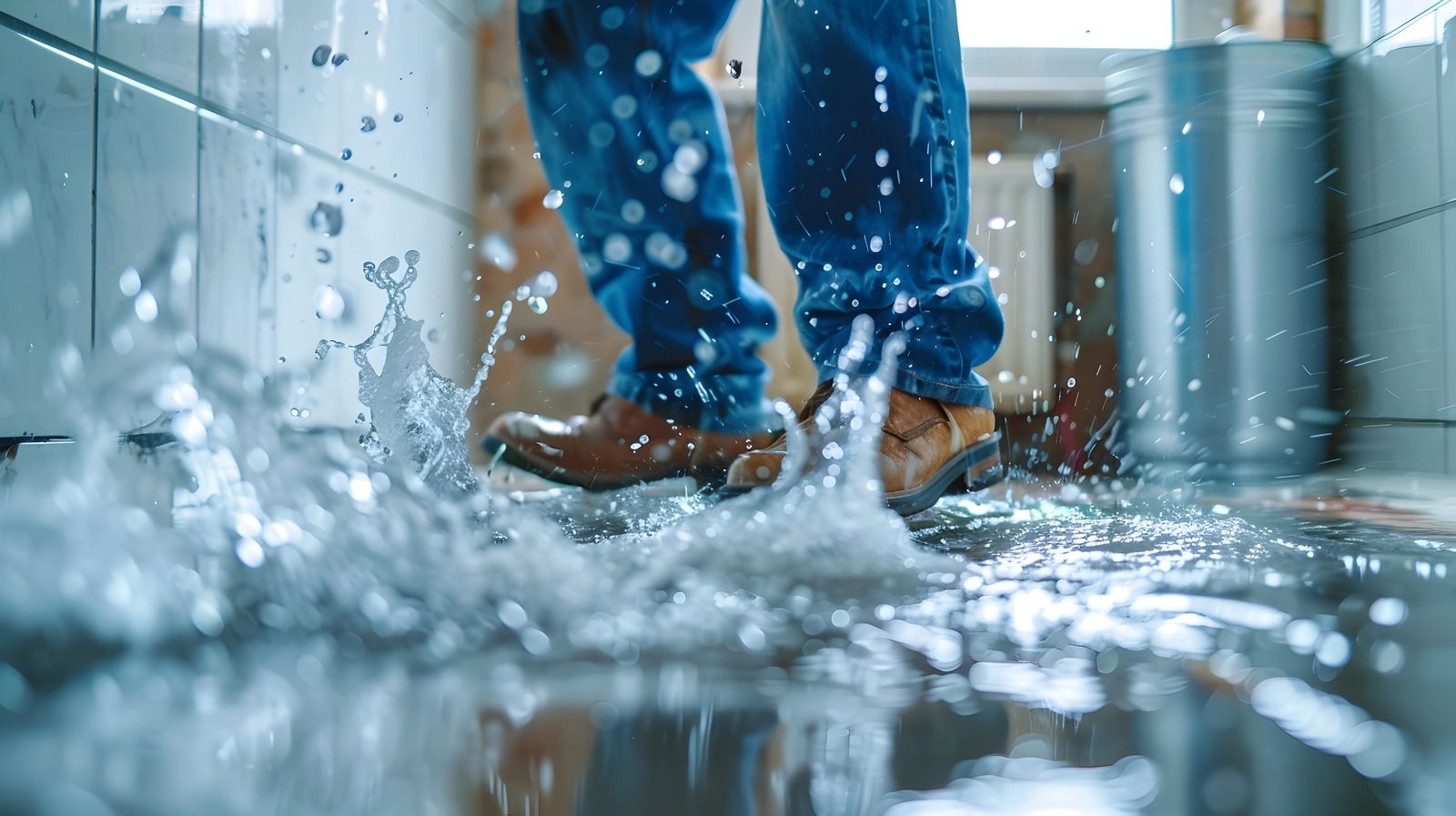
Do not walk into standing water that may be touching outlets, extension cords, or a plugged-in appliance. If the breaker panel is dry and reachable without crossing the water, cut power to the affected rooms. If it isn't, stay out and call an electrician or the utility. No amount of saved carpet is worth this risk.
Decide whether the space is safe to occupy
Sagging ceilings, bulging drywall, and water that came from a sewer line or a toilet overflow all change the answer. Contaminated water is a health issue, not just a cleanup issue, and ceilings holding water can come down without warning.
Water damage restoration work — San Antonio, TX
Hours one to four — document before you touch anything
Capture the scene before cleanup starts
Insurance claims are won or lost on what you captured before cleanup started. Once you begin extracting and hauling out ruined belongings, the evidence goes with it. Take wide photos of each affected room, then close-ups of damaged materials and belongings. Shoot a slow walkthrough video and narrate what you're seeing. Photograph the source itself — the split pipe, the failed hose, the leaking water heater. Write down the time you discovered it and the time you shut the water off. Keep damaged items in a garage or covered area rather than throwing them away immediately, and start a folder for every receipt, including fans you rent and hotel costs if you have to leave.
Notify your insurer early in the day
Notify your insurer early in the day rather than at the end of it. Most policies require prompt notice and require you to take reasonable steps to prevent further damage, so documenting and mitigating are not in conflict — they're both part of what you owe the carrier. Our guide to how insurance treats water damage claims walks through what's typically covered and what usually isn't.
Hours two to six — get the standing water out
Why household equipment runs out of road fast
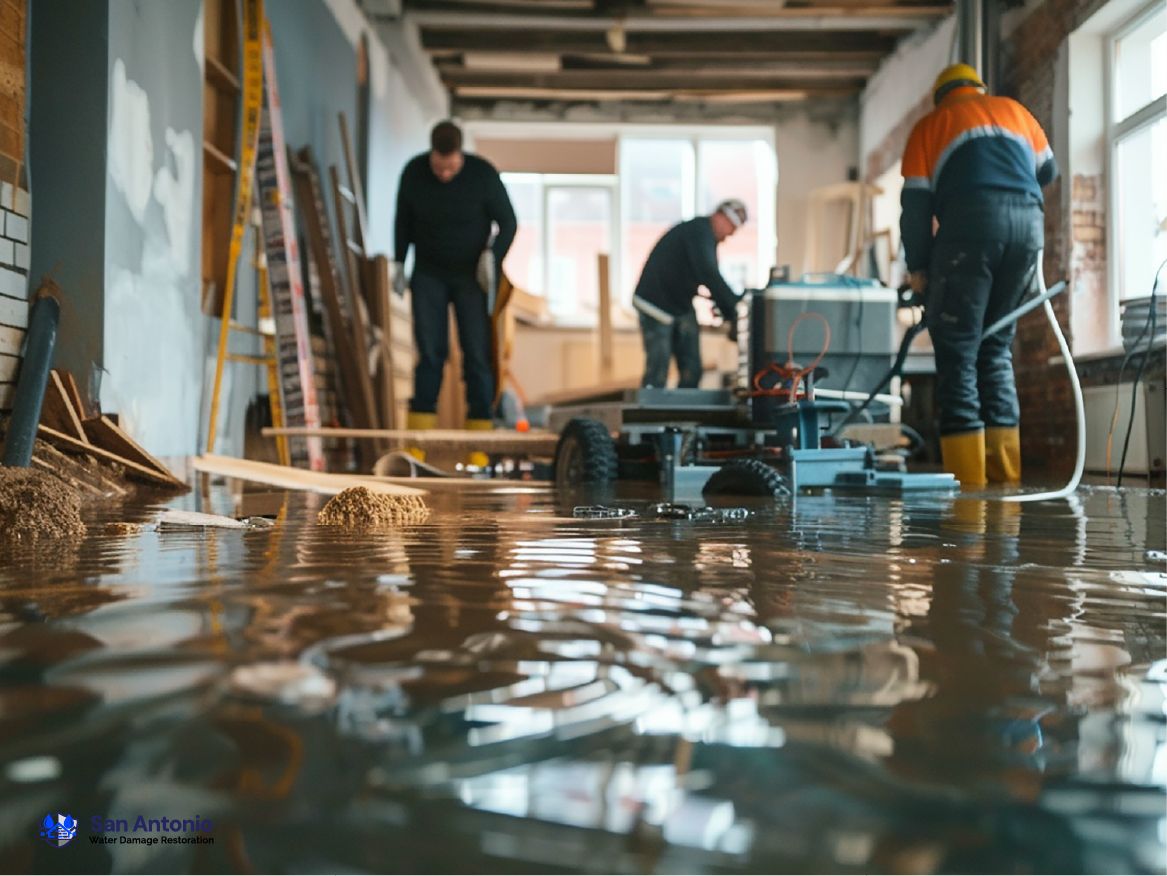
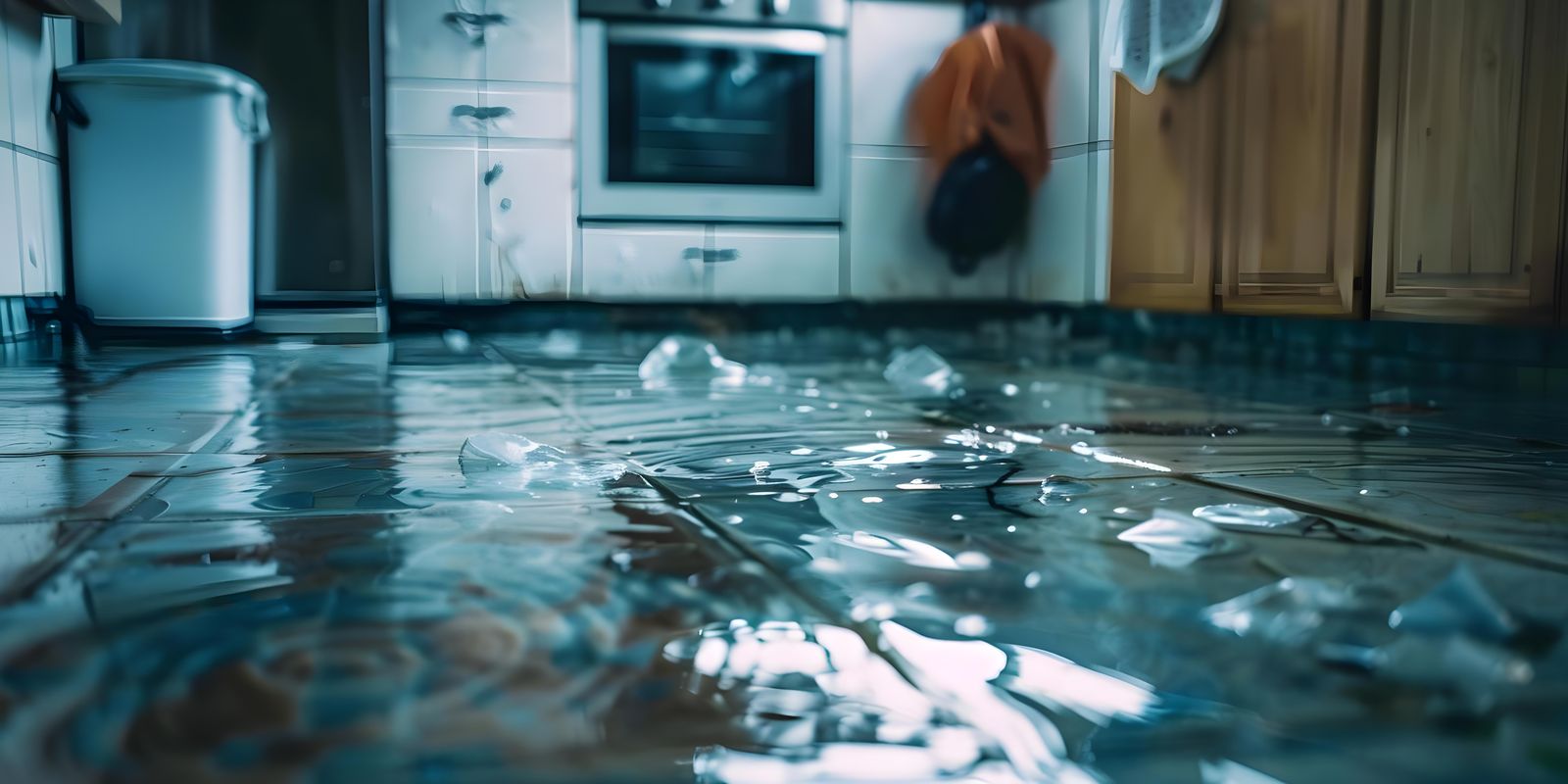
Standing water is doing damage every hour it sits. A wet/dry vacuum can handle a small, clean-water spill on a hard floor. Beyond that, household equipment isn't the right tool: carpet padding holds many times its weight in water, and water under a floating floor or inside a wall cavity can't be reached from above. This is the stage where professional extraction changes the outcome, because truck-mounted equipment removes volume that a shop vac can't approach, and because moisture mapping finds the water you can't see. If you're staring at standing water right now, professional emergency water removal in San Antonio is available around the clock at (726) 237-3201.
Two things to do while you wait
Lift furniture legs onto foil or wood blocks so finish doesn't bleed into carpet, and pull up loose area rugs, which stain flooring underneath as they dry.
Hours six to twelve — start drying, and know what you can't dry
Move air, and be careful about opening windows
Once the bulk water is gone, drying becomes the whole job. Move air across wet surfaces with fans, and run a dehumidifier if you have one. Opening windows helps only when the outside air is drier than the inside air, which in this part of Texas is often not the case — on a humid day, open windows can slow drying instead of speeding it.
What fans and a dehumidifier cannot reach
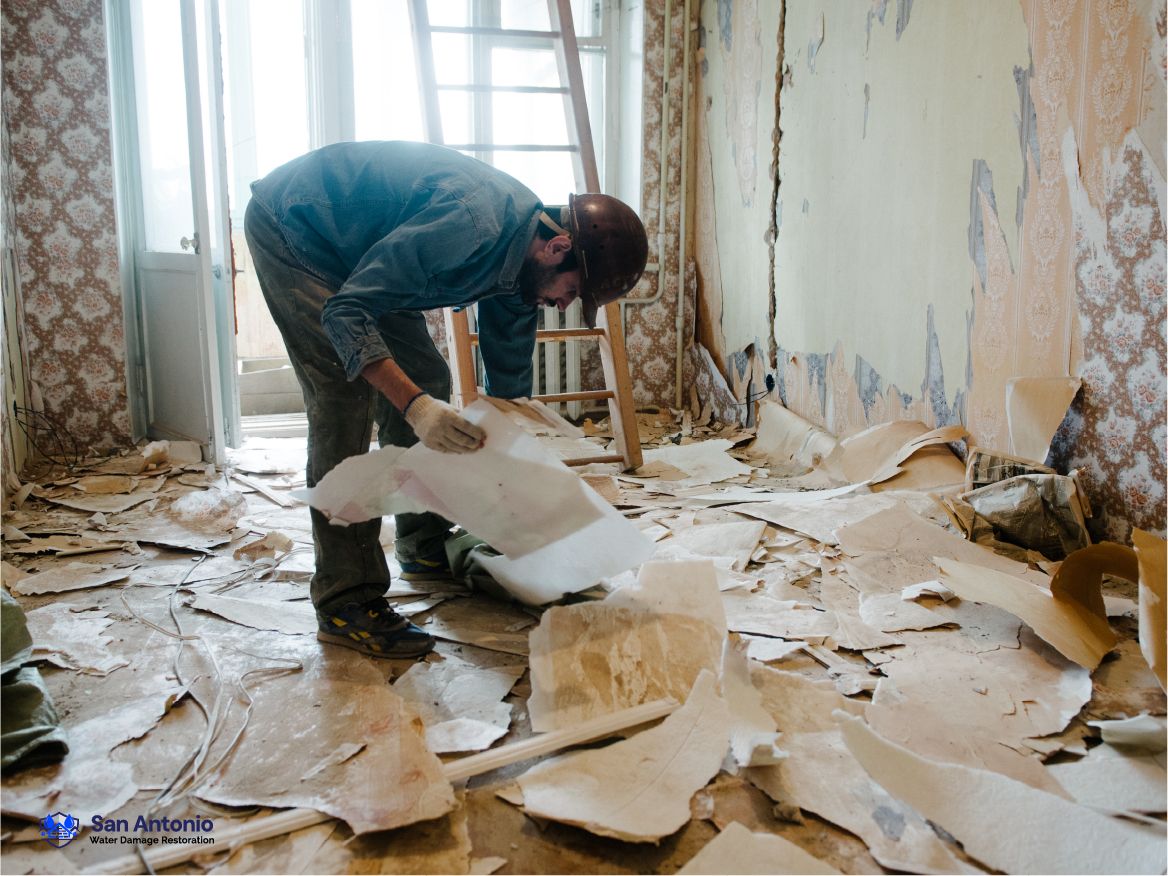
What household equipment cannot do is dry a wall cavity, the underside of a subfloor, or the space beneath tile set on a slab. Trapped moisture doesn't announce itself. It surfaces later as a musty smell, a soft spot in the floor, or paint that won't stop bubbling.
Hours twelve to twenty-four — watch for the late arrivals
Damage that shows up on the back half of day one
Some damage doesn't appear until the second half of the first day. Check baseboards for swelling, look for ceiling stains in the room below the leak, run your hand along the bottom of cabinets, and pay attention to any smell that develops. Note anything new with photos and timestamps — a claim built on a running record is far easier to support than one reconstructed from memory.
Things to avoid in the first 24 hours
Five mistakes that make the repair bigger
Don't run the HVAC system if water reached the ductwork or the air handler. Don't use a household vacuum on standing water. Don't throw away damaged property before it's documented, even if it's obviously ruined. Don't paint or seal over water-stained drywall to buy time; it traps moisture. And don't wait to "see if it dries on its own." That decision costs more than any other one on this list.
When it stops being a do-it-yourself situation
The situations that need instruments, not judgment
Call a professional if water came from a sewer line or toilet, if it spread across more than one room, if it reached walls above the baseboard, if it soaked carpet and padding, or if more than about a day has already passed. Those are the situations where drying has to be verified with instruments rather than judged by touch.
Get a crew moving
Water damage doesn't get less complicated overnight — it gets more complicated. If you're in the middle of it, call (726) 237-3201 and get a crew moving.
Dealing With Water Damage Right Now?
Lines are answered 24/7 and crews are dispatched across San Antonio at any hour. Call now, or request a callback.
📞 Call (726) 237-3201